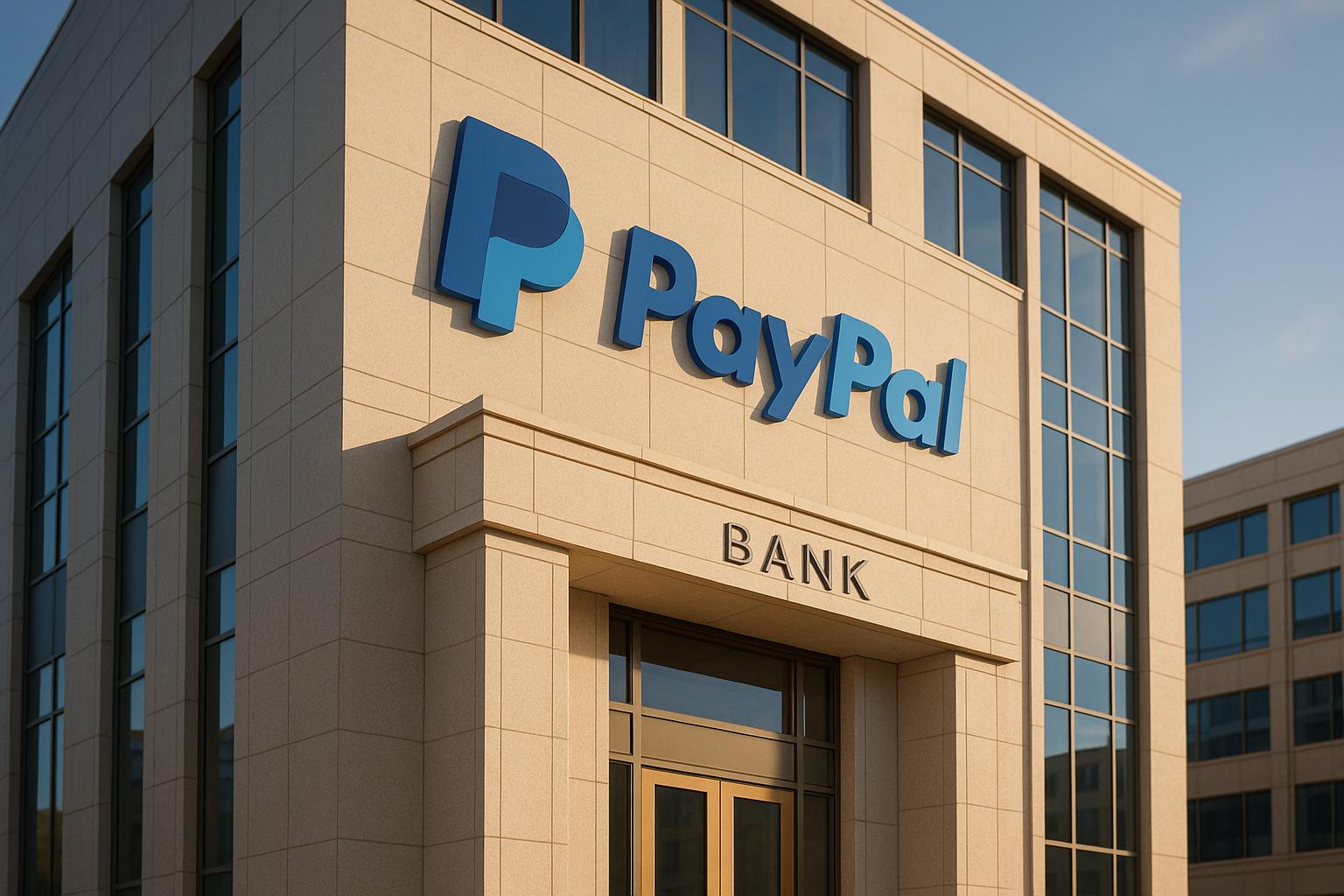

PayPal Holdings Inc. has taken a significant step in its push to enhance financial services by formally applying for a U.S. bank charter. The company submitted its application to the Federal Deposit Insurance Corporation (FDIC) and the Utah Department of Financial Institutions to establish a Utah-chartered industrial loan company, which would be named PayPal Bank.
"Securing capital remains a significant hurdle for small businesses striving to grow and scale", said Alex Chriss, PayPal’s Chief Executive Officer. "Establishing PayPal Bank will strengthen our business and improve our efficiency, enabling us to better support small-business growth and economic opportunities across the U.S."
Boosting Lending Capacity and Expanding Consumer Offerings
PayPal’s move to become a U.S.-chartered bank is primarily aimed at expanding its small-business lending capabilities while reducing reliance on external financial partners. If approved, PayPal Bank would have the capacity to offer FDIC-insured deposits, streamline loan processes, and potentially introduce interest-bearing savings accounts as part of its financial product offerings. These developments align with the company’s broader strategy to grow its consumer finance portfolio.
Currently holding a banking license in Luxembourg, PayPal is no stranger to regulated financial services. However, this latest development focuses on increasing its direct participation in banking within the U.S. market. According to Alex Chriss, strengthening the company’s balance sheet will be instrumental in addressing the capital challenges faced by small businesses across the country.
A Growing Trend Among Fintech and Crypto Firms
PayPal’s application comes amid growing interest in bank charters from fintech and cryptocurrency firms. Recently, the U.S. Office of the Comptroller of the Currency (OCC) granted conditional preliminary approvals to several companies in the digital asset space, including Circle Internet Group, Ripple Labs, BitGo, Paxos, and Fidelity Digital Assets. These approvals mark a shift toward integrating digital finance firms into the mainstream banking system, though these entities still face various regulatory requirements before full operations can commence.
Distinguishing itself from these crypto-oriented firms, PayPal’s bank charter application focuses on expanding traditional banking services such as lending and deposits, rather than pursuing national trust bank charters aimed at custody and asset management services.
Regulatory Shifts Encouraging Innovation
The surge in bank charter applications can be attributed to regulatory changes that have lowered barriers for non-traditional entrants into the banking sector. These shifts have provided fintech and cryptocurrency firms with greater clarity and access to the U.S. banking market. However, as this trend continues, some traditional banks and trade groups have raised concerns about risk management and the evolving definitions of banking authority.
In addition to PayPal, other notable companies pursuing similar paths include Nissan Motor Co.’s financing arm and Japan-based Sony Group Corp., both of which have expressed interest in obtaining bank charters.
Should PayPal’s application be approved, Mara McNeill, a former CEO of Toyota Motor Corp.’s financing division, is expected to lead PayPal Bank, steering the company’s efforts to integrate conventional banking services into its already extensive global payments network.
PayPal’s pursuit of a U.S. bank charter represents a pivotal moment for the company as it seeks to strengthen its business while addressing the challenges faced by small businesses. With regulatory momentum favoring innovation in the financial sector, this move could set the stage for broader participation by non-bank entities in U.S. banking. For PayPal, the establishment of PayPal Bank would mark a significant step toward further solidifying its presence in the financial services industry.