Self-Insured by Default
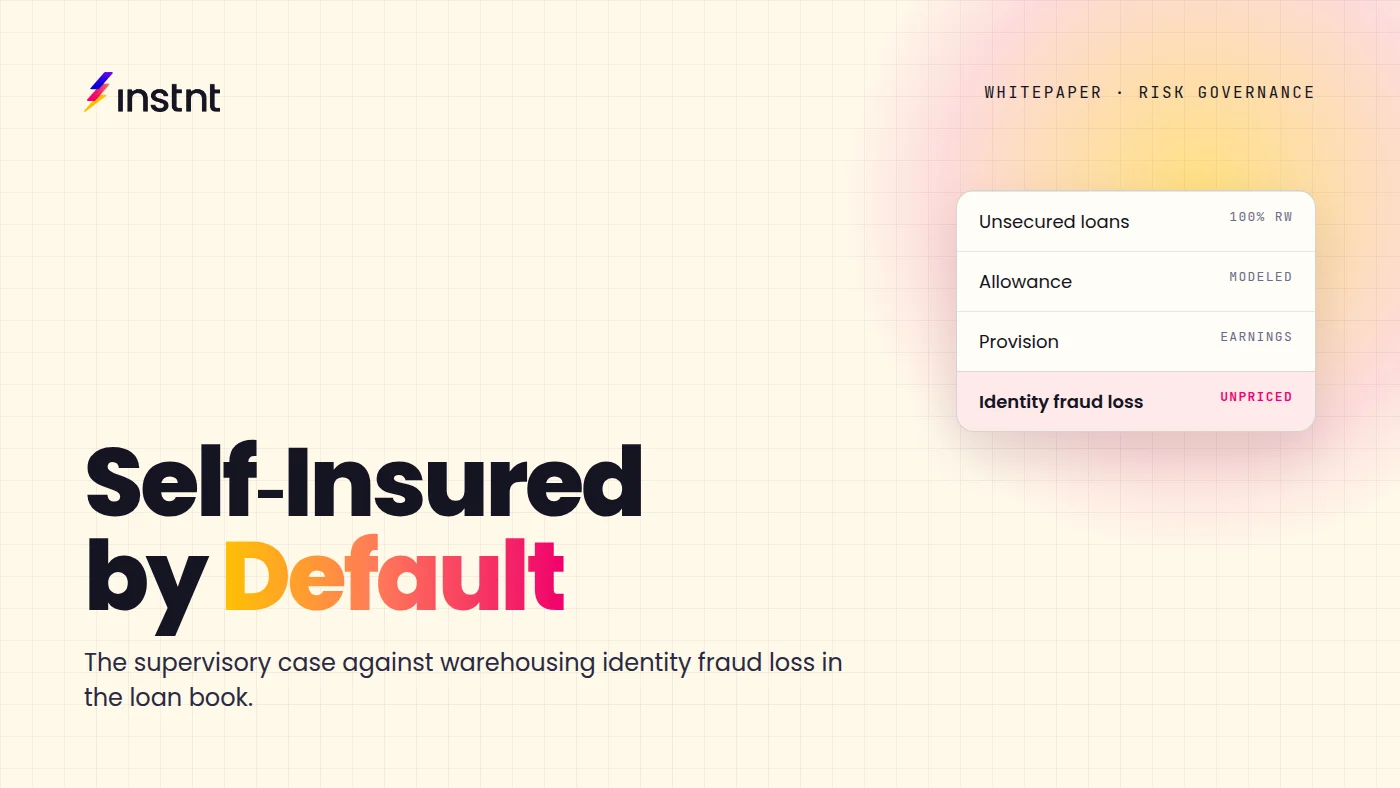
Every bank that lends unsecured is an insurer of identity fraud. It never wrote a policy, never priced a premium, and in most cases never recorded a decision to take the risk. It simply holds the loss: inside credit capital, inside the allowance, and ultimately inside earnings.
No rule requires a bank to buy fraud loss insurance, and this paper does not argue otherwise. The argument is narrower and, for a board, harder to dismiss. Supervisory standards expect institutions to identify, measure and control their material risks, to estimate losses accurately, and to report them accurately. A risk that is booked, capitalized and modeled as something else strains all three. Now that identity fraud loss is insurable, retaining it is a decision, and it should be documented as one.
Written for chief risk officers, CFOs and board risk committees at banks and credit unions.
What’s inside
- Banks already insure fraud. They just never priced it
- What the rules actually say
- A mislabeled risk is a supervisory problem
- From unmanageable to transferable
- Six questions for the board risk committee
- What transfer does, and what it doesn’t
- Turning a default into a decision
Get the full whitepaper
Welcome back. We'll email Self-Insured by Default to the address you gave us.
Tell us where to send Self-Insured by Default.