When Fraud Loss Hides in the Loan Book

A mid-size credit union in the Southeastern United States built a fast-growing digital lending program on a structure many institutions are now adopting: a consumer comparison marketplace feeds applicants to a third-party loan origination platform, which soft pre-approves them in a hosted flow, hard-approves the strong ones alongside the credit union, and hands over funded loans the institution can retain or sell. To absorb credit risk on that channel, the platform and the credit union each contribute 50 basis points to an allowance for credit losses on every loan written.
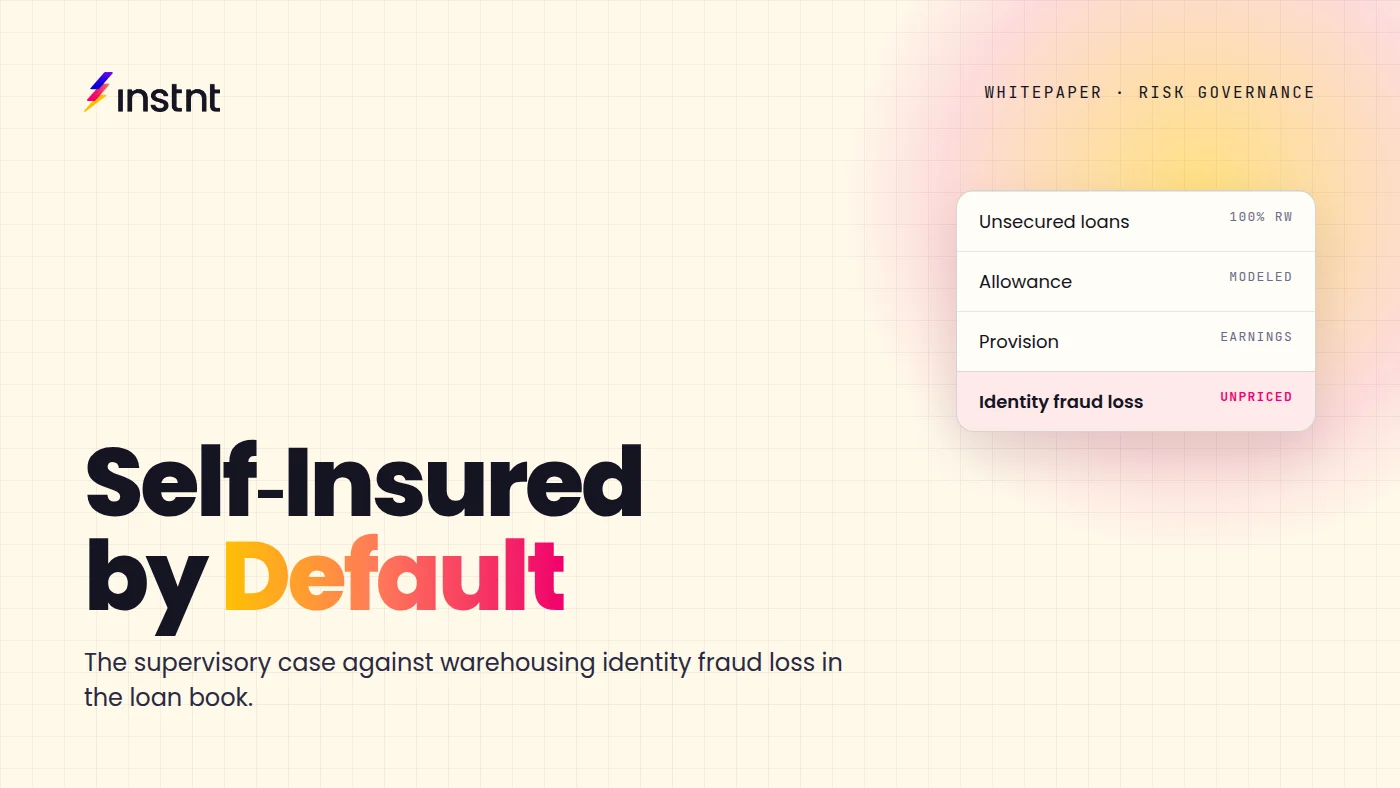
The channel worked. Then growth slowed, not because applicants dried up but because the co-funded reserve was depleting faster than the credit model predicted. The reason was identity fraud: synthetic, stolen, and first-party applicants who default by definition and whose losses had been booked as credit loss.
This whitepaper documents the evaluation, the structure of the coverage assessed, how it integrates with a hosted loan origination system, and a projection of where the institution would have stood had cover been in force from the start of 2026. It is written for lending, finance, and risk leaders at credit unions and community financial institutions facing the same channel economics.
What’s inside
- The 2026 fraud landscape
- The institution and its channel
- The reserve problem
- The measurement gap
- The approach evaluated
- How it integrates: the Instnt Agent
- The economics
- Where they should have been
- What to do with this
Read the evaluation profile that preceded it: When Fraud Loss Hides in the Loan Book, the case study.
Get the full whitepaper
Welcome back. We'll email When Fraud Loss Hides in the Loan Book to the address you gave us.
Tell us where to send When Fraud Loss Hides in the Loan Book.